From defence to strategic enabler: How the modern Security Operations Centre empowers business growth
The role of the SOC is shifting beyond defence, reflecting broader changes in cyber risk, leadership responsibility and the use of AI in operations.

Cyber attacks have evolved from occasional, opportunistic incursions into continuous, automated assaults orchestrated by AI empowered adversaries. Attackers now leverage machine learning to scale phishing campaigns and orchestrate reconnaissance, making malicious activity faster and harder to detect. In this environment the Security Operations Centre (SOC) is no longer just an IT monitoring function, it is a strategic business enabler. The decisions board members and C suite leaders make about their SOC will shape resilience, trust and the capacity to grow in a digital economy. The story below explores how the SOC is transforming, why leadership must pay attention, and what steps executives can take to embed security as a business platform.
In 2025 a series of high profile cyber incidents exposed a sobering truth: the breakdown often does not happen at the technical layer but at the executive level. Investigations into major breaches tied to widely used platforms revealed that while security teams detected issues and escalated concerns, decision making structures failed under pressure. Plans documented roles and escalation paths, yet authority to act was unclear, causing delays that magnified operational impact. Legal, communications and business stakeholders evaluated risk from different perspectives, waiting for confirmation of scope or intent, and as teams tried to align, response timelines lengthened. One lesson from these incidents was stark: documentation alone does not prepare leadership for the reality of response. A modern SOC must therefore be backed by executive alignment and practiced decision making if it is to safeguard the business.
Lessons from 2025: Executive readiness gaps
The major cyber incidents of 2025 underscored that incident response readiness must go beyond documentation and compliance. Investigations found that breakdowns occurred when leadership hesitated to escalate or struggled to decide who had authority to declare an incident. Plans looked robust on paper but had never been exercised under the ambiguity and time pressure of a real breach. As a result, executives waited for clarity that never came, while legal, communications and business units debated risk. To close this readiness gap, tabletop exercises must evolve into realistic war games that test decision making under uncertainty. Clear decision authority, early escalation triggers and predefined actions are essential components of executive playbooks that translate readiness into action. The lesson for C suite leaders is clear: resilience depends on practised authority and alignment, not just well written plans.
The modern threat landscape and the AI race
The threat landscape of 2026 is defined by automation confronting automation. Attackers increasingly adopt artificial intelligence to industrialise cybercrime using AI to automate reconnaissance, craft convincing phishing messages and pivot quickly after detection. According to an EY analysis, integrating agentic AI into the SOC presents a unique opportunity for organisations to unlock strategic value. When defenders adopt agentic AI they can reduce routine alerts and improve detection logic, but the value arises from combining AI with human expertise and intelligence. Human analysts provide context and judgement, while intelligent agents automate repetitive tasks and accelerate threat hunting.
While these tools accelerate detection and response, industry leaders underscore that the real contest is not just about deploying AI but wielding it effectively. As Nicolas Furge, President of Marlink Cyber, succinctly puts it, "It's becoming a battle of intelligence. The question is no longer whether AI will be used, it's who will use it better, and more responsibly." This perspective reframes the AI race as a competition of strategic insight and responsible deployment rather than brute force automation.
Traditional automation falls short in this environment. The Hacker News notes that even with rule based SOAR platforms, security leaders still face alert fatigue, manual correlation across disparate tools and brittle playbooks. Advanced SOCs are moving beyond co pilot chatbots to mesh agentic architectures where specialised AI agents autonomously triage, correlate evidence and assemble investigations. This shift cuts false positives by up to 80 % and reduces mean time to detect and respond (MTTD/MTTR) by 40–60 %, demonstrating the efficiency benefits of AI driven SOCs.
Foundations of an effective SOC
It is tempting to view a SOC as primarily a technology stack, but the real foundations are people, processes and technology. Stratascale's deep‑dive on modern SOCs emphasises a three‑pillar model:
- Proactive threat defence – anticipating and neutralising threats through AI and machine learning, continuous red‑teaming and threat intelligence.
- Strategic security management – aligning SOC activities with organisational strategy, integrating new technologies, driving continuous improvement and ensuring governance and compliance.
- Centralised cyber defence – integrating tools and processes for effective detection, response and incident management to reduce alert fatigue and analyst burnout.
These pillars reinforce the idea that tools alone cannot deliver resilience; they must be embedded within well‑defined processes and skilled teams. Without clear visibility into critical assets, defined roles and structured incident management, monitoring alone cannot provide resilience. Investing in governance, communication and human expertise is therefore fundamental.
From cost centre to business enabler
Historically, SOCs were seen as cost centres focused on logging and responding to alerts. To become a business enabler, the SOC must tie detection to revenue and resilience, not log volume. Marlink Cyber recommends starting with use‑case thinking that moves backward from business outcomes to the telemetry, detections and playbooks that protect those outcomes. For example, a payments company measures fraud loss reduction per thousand transactions; a manufacturer tracks minutes of production downtime avoided and a ship operator measures time spent in port. This shift prevents tool sprawl and ensures investments target critical functions and regulatory drivers.
Leading SOC programmes are also AI‑augmented, intel‑fed and human‑centred. Marlink's Cyber AI‑Augmented SOC combines 24\7 monitoring, advanced SIEM engineering and an active defence framework, achieving up to a 95 % reduction in noise and embedding compliance evidence generation to accelerate audits.
AI‑Augmented SOC: amplifying human expertise
AI is most powerful when augmenting human expertise rather than replacing it. The Hacker News notes that top‑tier AI SOC platforms incorporate multiple AI engines and adaptive learning loops, selecting the right tool for each incident and continuously learning from analyst feedback. Key capabilities include:
- Multi‑tier incident handling – supporting complex Tier‑2 and Tier‑3 investigations rather than just simple triage.
- Contextual intelligence – embedding organisational knowledge, risk profiles and detection engineering into the AI’s operating model.
- Non‑disruptive integration – working within existing SIEM, case management and ticketing systems without requiring extensive retraining.
- Transparent metrics and ROI dashboards – measuring investigation accuracy, analyst productivity uplift and risk reduction, not just alert counts.
By adopting these features, enterprises can realise both efficiency and effectiveness: false positives drop dramatically, detection and response times shrink, and analysts are freed to focus on high‑value tasks. However, AI autonomy remains a staged journey. As EY notes, agentic AI delivers the greatest value before and after routine alert management, accelerating detection logic development and response playbooks. Success depends on integrating data sources and securing buy‑in from business stakeholders and analysts.
Real‑world implementations illustrate this approach. For example, Marlink a global provider of satellite communications and cyber services operates several Security Operations Centres (SOCs) around the world. Its dedicated Cyber Security Operations Centres provide continuous monitoring, real‑time threat intelligence and expert incident handling. By combining AI‑driven analytics with experienced analysts, Marlink’s SOCs help customers detect threats earlier, respond more effectively and improve their cyber security posture. For organisations seeking to scale their security capabilities, partnering with a provider like Marlink can accelerate SOC maturity and provide immediate benefits.
Metrics that matter
Executives care about outcomes more than detections. The table below summarises some quantifiable impacts reported by industry sources:
| Key metric | Impact/Value | Source |
| False positives | Up to 80 % reduction with agentic AI SOCs | The Hacker News |
| Detection & response time | 40–60 % reduction in MTTD/MTTR | The Hacker News |
| Noise reduction | 95 % reduction in alert noise | Yash Technologies |
| Attack surface reduction | 85 % decrease in attack surface | Yash Technologies |
| Organisational risk reduction | 80 % reduction in risk | Yash Technologies |
| Vulnerability reduction | 50 % decline in vulnerabilities in 3 months | Yash Technologies |
Strategic imperatives for executives
Build a resilience focused budget
Budgeting for 2026 demands placing cyber security at the core. Marlink advises that the SOC should be your foundation for pre‑emptive defence, providing continuous 24/7 monitoring to identify vulnerabilities and anomalies before they become costly disruptions. SOC services also help organisations address the cyber security talent gap by providing access to experienced analysts at a fraction of the cost of in‑house staffing. When communicating with boards, frame SOC investments in terms of ROI: reduced downtime, faster incident response, compliance cost savings and customer trust.
Align SOC with regulatory and stakeholder expectations
Regulatory frameworks such as NIS2, GDPR and PCI DSS impose rigorous requirements for monitoring, incident reporting and auditability. An effective SOC streamlines compliance by generating documentation and evidence during incidents. Partnering with Managed Security Service Providers (MSSPs) such as Marlink provides scalability to match threat levels and ensures budgets are used efficiently.
Embed security into business strategy
A modern SOC must be embedded in the broader business ecosystem, not isolated from it. The shift from "defence cost" to "strategic enablement" occurs when SOC programmes protect revenue, compress risk, accelerate audits and increase the organisation's capacity to adopt new technology. Leadership must own the narrative: set outcome‑based metrics, schedule education sessions that demystify AI and cyber threats, and establish strong CISO–board partnerships.
Sector spotlight: Manufacturing & supply chain risks
While every industry faces escalating cyber threats, some sectors have become prime targets because of their role in global supply chains — shipping being one of them. Black Kite's 2025 Manufacturing Report found that manufacturers remained the number one target for ransomware for the fourth consecutive year, accounting for 22 % of publicly disclosed attacks. Ransomware incidents in manufacturing increased by 9 % year on year, driven by rapid digital transformation and vulnerabilities in interconnected supply chains. It was explained that "cybercriminals deliberately target this industry because they know its operational continuity is critical and any disruption can cause a cascading effect through global supply chains". For manufacturing companies earning over $1 billion, ransomware victims comprised 39 % of all attacks, highlighting how large enterprises with complex OT environments and global exposure are especially at risk. These statistics underscore why sector‑specific threat intelligence and supply chain visibility must be integrated into SOC strategies. Marlink Cyber is integrating sector‑specific intelligence to protect the businesses we serve. Executives in manufacturing and any industry reliant on complex supply networks should evaluate whether their SOC provides early warning across suppliers, partners and operational technology.
"An example in the maritime industry is the global costs of the incident with the Ever Given, although this wasn't a cyber attack it does show exactly what the impact can be of a single event on the global level."
AI‑driven vulnerability management: The SOC's next frontier
Vulnerability management has long been the unglamorous side of cyber security — a slow, manual cycle of scanning, scoring, patching and reporting that consistently falls behind the pace of new exposures. In 2026, that model is fundamentally broken. Organisations face tens of thousands of open vulnerabilities at any point in time, and traditional approaches that prioritise purely by CVSS severity score leave security teams drowning in low‑risk findings while genuinely exploitable weaknesses go unpatched. AI changes that calculus entirely, and forward‑looking organisations are now embedding AI‑driven vulnerability management directly into their SOC as a continuous, intelligence‑led capability rather than a periodic compliance exercise.
From periodic scanning to continuous exposure intelligence
The traditional quarterly or monthly scan cycle creates a dangerous blind spot: the window between scans is exactly when attackers move. AI‑driven vulnerability management eliminates that window by delivering continuous asset discovery and exposure monitoring across on‑premises systems, cloud workloads, operational technology and — critically for maritime operators — vessel networks that may only connect intermittently. AI models continuously correlate asset inventory data with threat intelligence feeds, known exploit databases, dark web signals and active attack campaign data to produce dynamic risk scores that reflect real‑world exploitability rather than theoretical severity. A vulnerability rated "critical" by CVSS but with no known exploit in the wild is deprioritised; a "medium" vulnerability actively used in current ransomware campaigns is escalated immediately. This shift from static scoring to dynamic, context‑aware prioritisation means security teams spend remediation effort where it actually reduces risk.
Connecting vulnerability management to the SOC
For too long, vulnerability management and SOC operations have run in parallel tracks, rarely sharing data in real time. That separation is a structural liability. When a SOC analyst detects suspicious lateral movement, they need to know instantly which systems the attacker may be pivoting towards and which of those systems carry unpatched vulnerabilities. Equally, when a new critical vulnerability is published, the SOC needs to know whether that vulnerability is present in its environment and whether it can see signs of exploitation already under way. AI closes this loop by feeding vulnerability context directly into the SOC's detection and investigation workflows.
In an integrated model, AI agents within the SOC automatically enrich alerts with exposure data. An alert on a vessel endpoint is not just a signal; it arrives in the analyst's queue annotated with whether that endpoint has unpatched CVEs, what their exploitability score is, and whether threat intelligence has observed active exploitation of those CVEs by known adversary groups. This context transforms alert triage from guesswork into informed decision‑making and ensures that the most vulnerable assets receive the fastest, most prioritised response. Marlink Cyber's unified portal approach is designed precisely with this integration in mind: a single pane of glass where SOC telemetry, asset exposure data and remediation status converge, giving both security analysts and business leaders an accurate, real‑time picture of organisational risk posture.
What leadership must own
AI‑driven vulnerability management is not a tool decision; it is a leadership decision. Executives must drive three organisational shifts to make it work. First, break down the organisational silo between the team managing vulnerability scans and the SOC. These functions must share data, share priorities and share accountability for risk reduction. Second, shift the success metric from "number of vulnerabilities patched" to "reduction in exploitable exposure" — a meaningful measure that reflects real business risk rather than operational throughput. Third, demand transparency: AI models must be auditable, and their prioritisation logic must be explainable to both security teams and the board. A black‑box vulnerability score that no analyst can challenge is not a management tool; it is a liability.
For maritime operators and other asset‑intensive industries, this matters even more. Vessels have extended maintenance cycles and limited connectivity windows, which means vulnerabilities on shipboard systems can persist for months before a patch can be applied. AI‑driven vulnerability management can model those constraints and recommend compensating controls — network segmentation, enhanced monitoring rules, traffic anomaly detection — that the SOC can deploy remotely while a permanent fix awaits the next port call. This is proactive, intelligence‑led security at its most practical: the SOC does not just respond to what has already happened, it continuously narrows the window in which an attacker can exploit a known weakness.
Security operations have moved from the back room to the boardroom. In a world where adversaries harness AI and automation, modern SOCs must evolve into strategic platforms that enable growth, resilience and trust. This transformation is not a technology project alone; it is a leadership decision requiring investment in people, processes and intelligent automation. By aligning SOC activities with business outcomes, adopting AI responsibly, and embedding security into the fabric of the organisation, C‑level leaders can transform a SOC from a cost centre into a competitive advantage.
Building cyber resilience
across your sector
Download the full 2026 cyber security report and protect your operations with our continuous threat intelligence
Download the report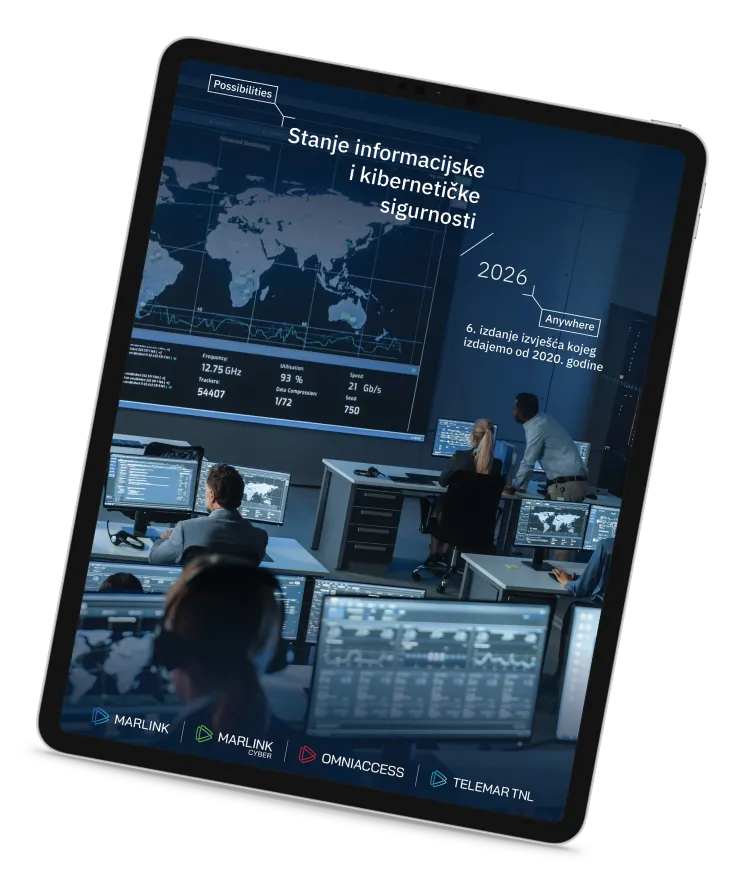

Get in touch
Contact us to find out how we can help you create new possibilities for your operations.
Insights
Read about our latest insights and explore the forefront of digital protection through our curated selection of news, articles, and expert blogs.